Books by Soumyen Bandyopadhyay
Envisioning the Indian City: Spaces of Encounter in Goa, Calcutta, Pondicherry and Chandigarh, 2025
A book of this kind, representing a collaboration across institutions and continents, acquires ma... more A book of this kind, representing a collaboration across institutions and continents, acquires many debts along the way -and the way has been a long one. First of all, we would like to express our thanks to the UGC-UKIERI Thematic Partnership between the Centre of Advanced Study in the Department of English, Jadavpur University, and the University of Liverpool, on Envisioning the Indian City: Spaces of Encounter, 2013-2015 (extended to 2016), which laid the ground for our academic exchanges and enabled many of the conversations and research initiatives that have borne fruit in our institutions and elsewhere. The project website, initially maintained by our two outstanding Project Research Fellows, Sujaan Mukherjee and Cleo Roberts, is in fact still active, at . We thank Sujaan Mukherjee for his brilliant cover design for this volume. We would also like to take this opportunity to thank the many contributors to this volume who have joined us along the way, although they were not part of the original project. We are particularly grateful for their patience in putting up with the long delay in bringing the book to publication, and for the generosity with which they have answered queries and provided material. Additionally, we thank the editors of the journal Portuguese Literary and Cultural Studies for permission to carry a revised version of Walter Rossa's article 'Myth as the Catalyst of a Cultural Heritage-Building Process: The Case of Goa' in this volume.

The Routledge Handbook on the Reception of the Classical Tradition, 2020
This chapter assesses the work of the British architect, Sir Herbert Baker for the imperial capit... more This chapter assesses the work of the British architect, Sir Herbert Baker for the imperial capital of New Delhi, in the context of the reception and rereading of the classical project and the wider classical tradition amongst the imperialists but also the colonized. The reception of the classical tradition in India assumed a character distinct from other British colonies as a result of a long-standing history of interaction with the classical world, as well as the sheer immensity of its diverse historical, literary and material culture traditions. With the consolidation of the British Empire in India, European classical traditions assumed attributes and resonances they did not possess in Europe. Baker’s writings and correspondence suggest the greatest reverence for the western classical tradition. Using mainly Baker’s correspondence and writings extending over several decades, now deposited at the RIBA Herbert Baker Archives (in the V&A and the RIBA), the chapter argues that Baker’s designs in New Delhi were attempts at capturing the humanist spirit of the classical tradition. This he did by evoking his poetic conception of classicism and its application through the key principles of organization and deployment of ordering elements to create an architecture of rhythm and grace. We discuss his conscious evocation of classical precedents and the perspective, the latter engendered by movement. The four-centred pointed arch – a nineteenth century imperial formulation of the expression of Indian classical tradition – was negated very early on by Baker and Lutyens in favour of the round arch. This, Baker was the first to revive on a grand scale in South Africa in the early part of the twentieth century for the purposes of imperial representation.
The following document proposes a detailed and comprehensive strategy for the preservation and de... more The following document proposes a detailed and comprehensive strategy for the preservation and development of the village of Misfāt al-'Abriyīn in the Wilayat al-Hamra of Oman. The aims are, as agreed with the Sultanate's Ministry of Tourism, the creation and implementation of a sustainable development strategy, which will ensure the survival of Misfāt's ancient heritage as well as provide an opportunity to showcase said heritage to stakeholders and visitors.
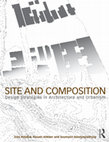
The book is concerned with the need for a renewed understanding of the site in the twenty-first c... more The book is concerned with the need for a renewed understanding of the site in the twenty-first century and the establishment of a critical position regarding the continued tendency to view the site as a fragment severed from its wider context. The dominant Modernist tendency to regard the world around as a fragmented phenomenon, which replaced the world of pre-Modern certainty, has been found inadequate in the post-Modern era of globalization, and amidst a renewed interest in achieving wholeness. Even as we have to treat sites increasingly as assemblages of orthogonal projections – which have no doubt helped designers often operating remotely in today’s globalized world of architectural practice – such abstraction need not necessarily prevent us from considering the deeper, often latent and less obvious knowledge about the site. Instrumentality and abstract codification per se, we argue, is not the problem, and as Alberti’s survey of Rome demonstrates, even critical to our understanding of orders of things. It is the counter-creative and anti-anthropological manner in which we have increasingly treated such material is what has caused the crisis.
Addressing these tendencies, this book has argued revisiting the instruments of both siting and composition in Architecture to explore their true potential in achieving connections between site and context. Departing from a reconsideration of the fragment and the process of its formation, fragmentation, the book emphasises the role of the ‘positive fragment’, and the role such positive entities could potentially play in achieving both historical continuity and renewed wholeness. It focuses on architects of wide-ranging persuasion of the twentieth century – for example, Peter Eisenman, Le Corbusier, Frank Lloyd Wright, Alvaro Siza, Herzog and de Meuron, and Charles Correa – whose work defy categorization under simple binary oppositions. Through the various examples studied here, we suggest that the instrumental means have the potential for enhanced analogical and scalar relationships capable of achieving poetic outcomes. By considering such architects’ works of diverse periods and geographical locations, one intention is to question the lenses of preconceptions through which their works are regarded and promptly put into artificial ‘political’ categories. However, more importantly, it is a plea to treat architecture and the city not as a collection of disjointed objects but as overlapping networks of relationships, cutting across temporal and cultural boundaries.
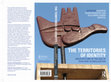
The Territories of Identity
Architecture in the Age of
Evolving Globalization
Soumyen Bandyopa... more The Territories of Identity
Architecture in the Age of
Evolving Globalization
Soumyen Bandyopadhyay & Guillermo Garma Montiel
Routledge November 2013
The expedited globalized process of exchange and new forms of cultural production have transformed old established notions of identity, calling into question their conceptual foundations. This book explores the spatial and representational dimension of this phenomenon, by addressing how the reshaping of the key themes of place, architecture and memory is altering the nature, as well as our understanding, of identity.
Cutting across boundaries, the book drives discussion of identity beyond the well-worn concern for its loss within a globalized context, and importantly provides links between identity, and place, memory and representation in architecture. Examining a number of case studies from Australia, Germany, India, Japan, Mexico, Poland, Puerto Rico, Turkey and Singapore, as well as with contributions cutting across temporal boundaries, this volume addresses a range of critical issues in the monitoring and mapping of identity shift within a rapidly globalizing context.
With contributions from renowned authors in the field, including Nezar AlSayyad, Robert Brown, Catherine Ettinger, Patsy Hely, John Hendrix, Liane Lefaivre, Fiona MacLaren, Andrzej Piotrowski, Raymond Quek, Luz Marie Rodríguez, Ana Souto, Nicholas Temple and Stephen Walker, this book presents fresh insights and diverse perspectives on the evolving question of identity and globalization.
Soumyen Bandyopadhyay is Professor of Architecture and Design at Nottingham Trent University, UK.
Guillermo Garma Montiel is Principal Lecturer in Architecture at Nottingham Trent University, UK.

In the December of 1835 Lieutenant Wellsted of the Indian Navy was making his voyage – the first ... more In the December of 1835 Lieutenant Wellsted of the Indian Navy was making his voyage – the first by an European traveler – through the Sharqiyyah and the Jawf regions of Oman. Having traveled by sea and overland he reached the outskirts of the oasis of Manah on the 21st of December from the east and was struck by the verdure,
“As we crossed these, with lofty almond, citron and orange trees, yielding a delicious fragrance on either hand, exclamations of astonishment and admiration burst from us. ‘Is this Arabia’, we said; ‘this the country we have looked on heretofore as a desert?’ . . . I could almost fancy we had at last reached that ‘Araby the blessed’, which I have been accustomed to regard as existing only in the fictions of our poets.”
Standing out amidst the arid barrenness of the regional landscape and restrained by the desert-bound wadi courses, Manah once truly affirmed the Arabic meaning of its name, ‘the gift from God’.
This monograph brings to light the architectural and urban character of Harat al-Bilad – the principal settlement of Manah. One of the frontier settlements straddling the boundary between the foothills of the Jabal al-Akhdar (Green Mountains) and the desert foreland, the oasis had played an important role in the historical and cultural development of the region. The Ministry of Heritage and Culture is currently undertaking conservation work in Harat al-Bilad a heritage site of national importance.
Contents. Introduction p7. Chapter 1 Passages into a land-locked island p13. Chapter 2 Core revealed: our expanding knowledge of ad-Dakhiliyah architecture p39. Chapter 3 Manah and Harat al-Bilad: setting and townscape p61. Chapter 4 Mosques of Harat al-Bilad p91. Chapter 5 Dwellings large and small p109. Chapter 6 Tribal pattern, settlement structure and the sablah p129. Chapter 7 Harat al-Bilad: origin, morphology and structure p161. Chapter 8 Water, purity and places of worship p189. Chapter 9 From the twilight of cultural memory: the distinctive mosque type of ad-Dakhiliyah p221. Chapter 10 Topographic conflation in the decorated maharib of Omani mosques p245. Chapter 11 Privacy and the deconstructed courtyard: dwellings of ad-Dakhiliyah p273. Conclusion Precarious negotiations: architectural invention amidst cultural continuity p291. Bibliography p297. Index p307.
Offering considerations of the impact which the humanities have had on the processes of architect... more Offering considerations of the impact which the humanities have had on the processes of architecture and design and subsequently defending their continued import, this book explores the issues from both historical and contemporary perspectives.
Written by leading academics in the fields of history, theory and philosophy of design, the essays draw profound meanings from cultural practices and beliefs (religious, mythic, poetic, political and philosophical). The traditional inter-relationships between word and image, narrative and space have been altered by the growing dominance of digital media on design and the associated influences of globalization and mass consumption. The chapters here consider how the growing monopoly of technological development in our culture is shaping architectural discourse and how emerging technologies can usefully contribute to a deeper understanding of our design culture.
Quite how we can restore - or indeed radically transform - the traditional dialogue between intellectual enquiry in the humanities and design creativity is at the core of this timely and important book.
Soumyen Bandyopadhyay is Professor of Architecture and Design at Nottingham Trent University and has previously taught at Liverpool University.
Jane Lomholt is a Senior Lecturer in architecture at the University of Lincoln where she is head of History and Theory.
Nicholas Temple is Professor of Architecture at the University of Lincoln, having previously taught at the University of Liverpool, the University of Pennsylvania and Nottingham University.
Renée Tobe is now based at the University of East London. She was recently Senior Lecturer in architecture at University of Lincoln.
Papers by Soumyen Bandyopadhyay
The situational space of André Breton’s atelier and personal museum in Paris
... Page 20. 25/10/07 Copyright reverts to the author The Role of the Humanities in Design Creati... more ... Page 20. 25/10/07 Copyright reverts to the author The Role of the Humanities in Design Creativity International Conference 2007 20 iii See Debora Silverman, 'A Fin-de-Siècle Interior and the Psyche: The Soul Box of Dr Jean-Martin Charcot,' Daidalos 28 (1988), pp. 24-31. ...
The deconstructed courtyard dwellings of central Oman
Courtyard Housing, 2004
Conservation of an oasis settlement: the case of Manah
Conservation of national heritage site of Harat al Bilad (Manah): approach, strategy and preliminary proposal [vols 1-2]
Interpretation of heritage sites and assessing cultural significance: the enclosed 'Zara' of Harat al-Bilad (Manah Oasis)
Speculation on the formal morphology of the mosques of Manah
Conservation Perspectives, 2022
The extent of that heritage is vast. Consider just those earthen heritage sites internationally r... more The extent of that heritage is vast. Consider just those earthen heritage sites internationally recognized-about 10 percent of the cultural sites on the World Heritage List are made of earth. And the world's earthen architectural heritage extends well beyond places on the List, running the gamut from churches and forts to homes and human settlements in Africa, the Middle East, Asia, Europe, and the Americas. For decades now, the GCI has engaged in research and field projects related to the conservation of earthen architecture. ... Soumyen Bandyopadhyay, the Sir James Stirling Chair in Architecture at the University of Liverpool, traces the development of the conservation of historic earthen architecture in Oman and then explores in more depth conservation and adaptive reuse in Omani historic settlements constructed with earth.
Journal of Material Cultures of the Muslim World, Oct 24, 2022
This contribution studies the complex arrangement of legal, socio-economic, and technical aspects... more This contribution studies the complex arrangement of legal, socio-economic, and technical aspects of the aflāj (s. falaj) water distribution and irrigation system, and how they have shaped communities and built environments in Oman, where the falaj has provided the virtual lifeline of oasis life since the first millennium BCE. Three case studies of falaj communities are presented,
Birkat al-Mawz, al-Ḥamrāʾ, and Misfāt al-ʿAbrīyin, which developed during the prosperous early-Yaʿrubi period in the mid-eleventh/seventeenth century. It investigates the extent to which the Ibāḍī-Islamic legal framework allowed flexibility for the local governance, management, and organisation of this ancient system, and its adaptation to diverse demographic, environmental, and emergent socio-political conditions.
Keywords: Birkat al-Mawz; dawrān; falaj; fiqh rulings; Ibāḍī; local governance; Misfāt al-ʿAbrīyīn; Oman; qanāt; Yaʿāriba
Al-Hamra: Misfat al-Abriyin Tourism Development Plan
Progress and housing in Oman
College Conference: Re-defining Research, 8 July 2010: conference proceedings



Uploads
Books by Soumyen Bandyopadhyay
Addressing these tendencies, this book has argued revisiting the instruments of both siting and composition in Architecture to explore their true potential in achieving connections between site and context. Departing from a reconsideration of the fragment and the process of its formation, fragmentation, the book emphasises the role of the ‘positive fragment’, and the role such positive entities could potentially play in achieving both historical continuity and renewed wholeness. It focuses on architects of wide-ranging persuasion of the twentieth century – for example, Peter Eisenman, Le Corbusier, Frank Lloyd Wright, Alvaro Siza, Herzog and de Meuron, and Charles Correa – whose work defy categorization under simple binary oppositions. Through the various examples studied here, we suggest that the instrumental means have the potential for enhanced analogical and scalar relationships capable of achieving poetic outcomes. By considering such architects’ works of diverse periods and geographical locations, one intention is to question the lenses of preconceptions through which their works are regarded and promptly put into artificial ‘political’ categories. However, more importantly, it is a plea to treat architecture and the city not as a collection of disjointed objects but as overlapping networks of relationships, cutting across temporal and cultural boundaries.
Architecture in the Age of
Evolving Globalization
Soumyen Bandyopadhyay & Guillermo Garma Montiel
Routledge November 2013
The expedited globalized process of exchange and new forms of cultural production have transformed old established notions of identity, calling into question their conceptual foundations. This book explores the spatial and representational dimension of this phenomenon, by addressing how the reshaping of the key themes of place, architecture and memory is altering the nature, as well as our understanding, of identity.
Cutting across boundaries, the book drives discussion of identity beyond the well-worn concern for its loss within a globalized context, and importantly provides links between identity, and place, memory and representation in architecture. Examining a number of case studies from Australia, Germany, India, Japan, Mexico, Poland, Puerto Rico, Turkey and Singapore, as well as with contributions cutting across temporal boundaries, this volume addresses a range of critical issues in the monitoring and mapping of identity shift within a rapidly globalizing context.
With contributions from renowned authors in the field, including Nezar AlSayyad, Robert Brown, Catherine Ettinger, Patsy Hely, John Hendrix, Liane Lefaivre, Fiona MacLaren, Andrzej Piotrowski, Raymond Quek, Luz Marie Rodríguez, Ana Souto, Nicholas Temple and Stephen Walker, this book presents fresh insights and diverse perspectives on the evolving question of identity and globalization.
Soumyen Bandyopadhyay is Professor of Architecture and Design at Nottingham Trent University, UK.
Guillermo Garma Montiel is Principal Lecturer in Architecture at Nottingham Trent University, UK.
“As we crossed these, with lofty almond, citron and orange trees, yielding a delicious fragrance on either hand, exclamations of astonishment and admiration burst from us. ‘Is this Arabia’, we said; ‘this the country we have looked on heretofore as a desert?’ . . . I could almost fancy we had at last reached that ‘Araby the blessed’, which I have been accustomed to regard as existing only in the fictions of our poets.”
Standing out amidst the arid barrenness of the regional landscape and restrained by the desert-bound wadi courses, Manah once truly affirmed the Arabic meaning of its name, ‘the gift from God’.
This monograph brings to light the architectural and urban character of Harat al-Bilad – the principal settlement of Manah. One of the frontier settlements straddling the boundary between the foothills of the Jabal al-Akhdar (Green Mountains) and the desert foreland, the oasis had played an important role in the historical and cultural development of the region. The Ministry of Heritage and Culture is currently undertaking conservation work in Harat al-Bilad a heritage site of national importance.
Contents. Introduction p7. Chapter 1 Passages into a land-locked island p13. Chapter 2 Core revealed: our expanding knowledge of ad-Dakhiliyah architecture p39. Chapter 3 Manah and Harat al-Bilad: setting and townscape p61. Chapter 4 Mosques of Harat al-Bilad p91. Chapter 5 Dwellings large and small p109. Chapter 6 Tribal pattern, settlement structure and the sablah p129. Chapter 7 Harat al-Bilad: origin, morphology and structure p161. Chapter 8 Water, purity and places of worship p189. Chapter 9 From the twilight of cultural memory: the distinctive mosque type of ad-Dakhiliyah p221. Chapter 10 Topographic conflation in the decorated maharib of Omani mosques p245. Chapter 11 Privacy and the deconstructed courtyard: dwellings of ad-Dakhiliyah p273. Conclusion Precarious negotiations: architectural invention amidst cultural continuity p291. Bibliography p297. Index p307.
Written by leading academics in the fields of history, theory and philosophy of design, the essays draw profound meanings from cultural practices and beliefs (religious, mythic, poetic, political and philosophical). The traditional inter-relationships between word and image, narrative and space have been altered by the growing dominance of digital media on design and the associated influences of globalization and mass consumption. The chapters here consider how the growing monopoly of technological development in our culture is shaping architectural discourse and how emerging technologies can usefully contribute to a deeper understanding of our design culture.
Quite how we can restore - or indeed radically transform - the traditional dialogue between intellectual enquiry in the humanities and design creativity is at the core of this timely and important book.
Soumyen Bandyopadhyay is Professor of Architecture and Design at Nottingham Trent University and has previously taught at Liverpool University.
Jane Lomholt is a Senior Lecturer in architecture at the University of Lincoln where she is head of History and Theory.
Nicholas Temple is Professor of Architecture at the University of Lincoln, having previously taught at the University of Liverpool, the University of Pennsylvania and Nottingham University.
Renée Tobe is now based at the University of East London. She was recently Senior Lecturer in architecture at University of Lincoln.
Papers by Soumyen Bandyopadhyay
Birkat al-Mawz, al-Ḥamrāʾ, and Misfāt al-ʿAbrīyin, which developed during the prosperous early-Yaʿrubi period in the mid-eleventh/seventeenth century. It investigates the extent to which the Ibāḍī-Islamic legal framework allowed flexibility for the local governance, management, and organisation of this ancient system, and its adaptation to diverse demographic, environmental, and emergent socio-political conditions.
Keywords: Birkat al-Mawz; dawrān; falaj; fiqh rulings; Ibāḍī; local governance; Misfāt al-ʿAbrīyīn; Oman; qanāt; Yaʿāriba